Wednesday, August 8, 2012

Oh no, Brown and Osborne have morphed into Geordon

They reportedly hate each other but the current and former Chancellor are increasingly merging into one.


No one was more fiercely critical of Brown as Chancellor than me and that was in the boom years as well as the the recession which followed.

I hoped George Osborne would draw a line under the Brown years and set Britain on the right course.  But increasingly it seems there is little to choose between the current Tory economic policies and the Labour ones that left the UK in ruins.

Read these five criticisms of recent Treasury policy and decide who they apply to, George or Gordon:

Out of control public sending - The Chancellor has allowed public sector spending to rise remorselessly as a % of GDP to the point where half of the UK economy is taken up by government spending, 20% of that financed by borrowing which never seems to come down, making a mockery of the "austerity" or "iron" Chancellor reputations.

Blame the foreigners - once it was the US for the sub - prime crisis which had the temerity to burst the UK's bubble and now it's the Eurozone for slowing demand for British exports.  Convenient scapegoats for a disastrous performance by the UK economy and its chancellors.

Laissez faire monetary policy - The decision to farm out responsibility for monetary policy to the Bank of England was widely-praised but it looks to me like an abrogation of responsibility.  How can you claim to be running the economy when the most important policy decisions (QE, interest rates) are made elsewhere?      The B of E has a government set inflation-target of course but this is deeply flawed and takes insufficient account of asset bubbles, money supply, the exchange rate and absolute levels of indebtedness.  The unspoken rule of the Chancellor seems to be that the B of E is free to adopt whatever monetary policy it likes . . . as long as it is loose.

Tricks and wheezes  -  There used to be a time when Chancellors announced programs which changed the face of the country - think Lawson's tax reforms in the late 80s and Healey's change of course in the late 70s.  Now we get short term fiddling and little games to try and "wrong foot" the opposition.  Lots of knockabout political point scoring and short term initiatives, nothing substantial for the long term.

As a footnote there are two members of the government who ARE making important reforms with long term economic ramifications  they are just not in No 11 (Gove - Education, Duncan Smith - Welfare).

Off balance sheet finance - why raise money transparently and honestly through the tax system when you can finance pet projects on the never never via dubious PFI schemes, Infrastructure Banks?  These schemes look like they are giving the taxpayer something for nothing but, as we are finding out with PFI-financed hospitals, they will come back to bite us in the end.

Can't decide which criticism belongs to whom?  It's because increasingly they  apply to both equally. Brown and Osborne have morphed into one terrifying being.  Heaven help us.

From our website:  Starting a business in Spain

Saturday, July 28, 2012

A health problem that made me sit up and take notice


I spend lots of my time at airports waiting for planes and I rarely sit down.  Even when an opportunity presents itself I prefer to pace around or just stand and stretch a bit.  The way I see it, I am shortly going to be glued to a seat for several hours and a voluntary sit-down is the last thing I need before the journey.

It seems like my anti-sitting stance (if you will excuse the pun) is backed up by hard science.  That's if you believe the reports in the press about new evidence suggesting sitting more than three hours a day can take 2 years off your life.  Apparently you can take off another 18 months if you do a lot of your sitting in front of the TV.  Sorry Homer.

Some exercise during a day of heavy sitting doesn't seem to counteract the effects of long motionless periods: the results were similar for people who exercised and those who didn't.

You have to question the statistical value of taking an average lifespan difference and applying that to individuals.  Presumably this 2 year figure relates to a sample of lives examined where some "sitters" died very young because of possibly related issues (heart attacks, obesity, dementia, cancer, diabetes) but some lived to a ripe old age.  Just because the average worked out to two years doesn't justify the "sitting takes two years off your life" headlines.

Some other scientists have also cast doubt on the findings saying that the results take insufficient account of associated lifestyle factors - people who sit a lot are maybe more likely to have other unhealthy habits so don't pin all the blame on sitting.

But it was a worrying finding for several reasons not least of which is the fact that I spend at least 10 hours a day seated.

It was a serous study covering over 150,000 people for several years.  The findings fit in with previous research (see this Australian study reported here - Sitting too long raises death risk) and frankly what you might intuitively think:  humans weren't designed to sit for hours staring at screens and there will be a cost.

Brits are among the least active people in the world according to this chart:


But the it is in America where the issue of sitting too long has provoked the most discussion.  There is even a trend towards standing at work which is supposed to offer a myriad benefits such as weight loss, better attention spans and less back trouble.  Office supply shops sell adjustable desks which allow you to stand or sit.

As ever with these health trends there are contradictory voices which cast doubt on the benefits of standing and studies which show it has little or no effect.

One thing that is no in dispute is that modern man and woman is not active enough full stop; sitting for long periods is just an extreme manifestation of this.  

So I am going to try and make myself get up and walk round the office at least three times an hour.  Sounds a lot but when you consider that you get up naturally quite a lot any way it is not such a hard thing to do.  If I get up to go to the printer I go a long way round the office and I find more reasons for standing up and stretching my legs, like getting a cup of water.

From our website :  Beckham's Law survives

Thursday, July 19, 2012

Spanish families squeezed for €415 more tax

€415.  That's the estimated annual cost per household of the increase in IVA recently announced by the Spanish government to try and close the fiscal deficit.

The general rate applicable to anything sold in the country apart from reduced or VAT-free categories (see below) is up to 21% from the current 18%.

Beneath this headline-grabbing rise is a second increase to the "reduced" rate category of taxable goods and services which goes up from 8% to 10%.  This 25% hike in tax is important as it is the rate applicable to such things as some food and non-alcoholic drink, health products, transport, entertainment etc that ordinary people consume every day.  So it will really make everyone feel poorer and reduce spending power right through society.

This reduced rate also applies to new build construction so a new house will cost an extra 10% in tax on top.  This does not apply until 2013 as the previous government brought in a temporary VAT cut to 4% for new homes which expires this year.

And that's just IVA of course.  Spending cuts have targeted unemployment benefits and the pay of public sector workers.  The latter seems bound to lead to strikes.

Another move, specifically at the request of Spain's new fiscal masters in Brussels apparently, has been to abolish the offset of housing costs versus tax except for buyers of property post-2006.

Economists foresee the already shrinking economy declining further as a result of the new hits to demand, with forecasts of recession through to 2014.  No surprise there but there is a surprise, to me at any rate, in the size of the expected contraction.  For example the IMF is talking about a 1.5% fall in GDP this year and actually growth of 0.6% next year.  Hardly Greek style-collapse but the IMF have been wrong before.

If they are right and Spain can muddle through with the economy merely stagnant while these deficit measures take effect and the banks are sorted out then perhaps a full blown bail-out or euro exit can be averted.

I have my doubts.  Looking around the country it seems like there is an air of desperation and bewilderment among the population even before these latest tax rises and spending cuts.  Big price rises across the board, wage and benefit cuts, higher income tax, regional spending cuts etc will surely crucify what is left of economic confidence.  And I wouldn't rule out the Spanish people rising up and demanding that some of the measures are reversed as the pain becomes too great to bear.  We'll see.

From our website:  Allowable business expenses in Spain

Saturday, July 7, 2012

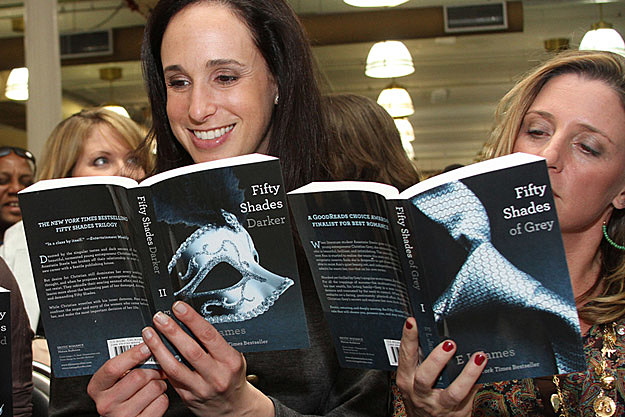
Fifty shades of the same old same old


One way to judge just how phenomenal a cultural phenomenon is, is to start typing the person/scandal/film etc into Google and see how many letters it takes to predict what you are looking for.

Right now typing "5" into Google brings up 'Fifty Shades of Grey' - an impressive one character score which handily beats 'Jesus' which requires three characters to predict.

This is the novel which, unless you have been living in a darkened room with a blindfold on (a bit like the heroine of the book probably), you will know is the fastest selling book of all time - excluding Harry Potter.  A remarkable achievement for a book which is aimed only at the female half of the population and which, unlike the Potter series, is not being bought by the vast young adult market.

I haven't read any of the trilogy but I am always fascinated by the phenomena of bestsellers and have read a few articles like this one: Why women love Fifty Shades of Grey.

The thing that interests me about the story of Fifty's success is not its adult content but rather the fact that it has been universally panned as a piece of writing, even by its readers who have then proceeded to rush out and buy the other two books in the trilogy.

We are not just talking about some highbrow (and probably jealous) literary reviewers slagging off the quality of the prose.  Dan Brown's 'Da Vinci Code' and JK Rowling came in for this kind of criticism but people were still captivated by the story and the fictional worlds the authors had created.  Most of us recognise that the popularity of a book has little to do with elegant writing of the kind that say Sebastian Faulks* is capable of.

* - great author but with a woeful Google test score of 10

But the criticism of EL James' novels is of a different order.  It's not just the prose style that gets a pasting.  I saw one article which estimated that 95% of online reviews were negative, criticising the plotting, characterisation and even the much-hyped sex scenes.

Just look at the parodies that are springing up such as "Fifty Sheds of Grey" on Twitter which is an inspired collection of snippets from the book as written by a gardener.  Sample: 'I lay back exhausted, gazing happily out of the shed window. Despite my concerns about my inexperience, my rhubarb had come up a treat . .'  or 'Lady Christina bit her lip as she eyed my dripping brush.  Somehow I knew it wouldn't be long before I was touching up her gazebo'.

The book is a joke, but  an amazingly successful one.  Obviously the press hooha about the adult content and the natural desire to see what all the fuss is about are now driving the sales to warp speed, but there must be some core appeal particularly to explain the success of books two and three.


Distilling all the explanations I have read about what this appeal might be, it seems that the romance rather than the eroticism is the key: how will the relationship between the two leads work out?  Will she?  Should she?  In other words the staple content of all romantic fiction since time immemorial.  The genius lies in the choice of a novel and daring device for creating the romantic tension: the hero's dubious sexual predilections.


Readers can read a very old and hackneyed fictional form and feel they are reading something fresh, original and controversial.  It's the same trick that works in every field of entertainment - put a new twist on an old favourite - but it's devilishly hard to do so hats off to EL James.  Now back to the parodies:


Spanish wealth tax 2012


Wednesday, June 27, 2012

China and the miners: place your bets

“A crisis is an opportunity riding the dangerous wind” goes a Chinese proverb.


For investors who want to make money out of one of the century's biggest and most profitable themes - the commodities boom led by China - now is a time of great opportunity and risk.

There is an apparent opportunity because the mining shares that have done so well are relatively cheap after several months drifting lower.  And risk because the cause of the share price weakness, the slowdown in China, could yet end in a crash.

The China-boom-or-bubble debate has been a hardy internet staple on business/investment chat sites for several years.  Perhaps only the inflation-deflation argument has generated more heated argument.

On the one side you have the China bulls who believe the country's thirty year 10% annual growth record is good for another decade or more yet.  They call the current slowdown a blip and claim normal service will be resumed later in the year as government stimulus measures kick in. These include the first interest rate cut for three years and a car subsidy program.

The China bears fret that the incredible China boom is literally that - too good to be true - and that Chinese growth is unsustainable  Just like Ireland, Spain and Japan, a boom underpinned by cheap money and property speculation will give way to bust.

"Dubai times a thousand" was how a renowned bear (Jim Chanos) put it but he said that 2 years ago and, although property prices have come down in some top tier cities, the general crash he predicted has yet to materialise.

I lean towards the side of the bears but it is an oft-observed fact that the economic phenomena that seem unsustainable can persist for much longer than you think.  People have been calling the demise of the US (and Japanese and UK) sovereign debt markets for years.  They may be proved right eventually but you can lose a lot of money shorting something prematurely.

As for the bull case, I have a lot of time for Dr Stephen Loeb and he is in the "blip" corner.  His article "Silver, Copper, Gold and China" states the case for continuing China growth and a recovery in commodities (and miners) very well.

If you are persuaded by his argument and think the commodities boom has a lot further to run, then now would be a good time to back your judgement and buy ETFs which hold physical commodities like gold and copper which have suffered recently.  Loeb is very keen on silver which has a key industrial role in for example solar panel production.

Another option is the shares of mining companies.  Obvious choices are highly diversified giants quoted in London such as BHP and Anglo-American.  In the past I have had profitable dealings in mining royalty holder, Anglo Pacific (AFP), which has recently been marked down due to some specific problems at a coal mine which it will recover from (see here).

Finally I am intrigued by Glencore which always seems to be in the headlines, most recently because of its on-off merger with Xstrata.  It's shares have slid by almost a third in just a couple of months.  The markets have been a bit dubious of this company I think partly because it's profits derive from trading commodities as much as producing them and the trading bit is somewhat opaque.  However there is no doubt that the people who have built up Glencore, including multi-billionaire Ivan Glasenberg, are extremely smart and ambitious.

Buying Glencore would be a triple play on a China recovery, a successful conclusion to Xstrata merger and on the company's management.  Too rich for my blood but the share price, at under £3, makes it tempting.

From our website:  Massive tax rises in Spain for 2012


Sunday, June 17, 2012

Super bid premiums are a vote of confidence in UK shares

With UBS equity strategists talking about a 20% chance of a "black cloud" scenario (mainly involving Eurozone calamity) leading the FTSE down to 3,500, it might seem an odd time to be touting UK shares.

But a bit of news from the oil sector last week gives British shareholders cause for optimism.  Cairn Energy agreed to buy a small North Sea oil company called Nautical Petroleum last week but had to pay a 50% premium to the pre-bid share price to get the deal.

That's been greeted favourably by analysts covering both Cairn and the company being acquired, so it sounds like a fair price and Cairn are not believed to have overstretched in valuation terms looking at the price per barrel of oil it is potentially getting for its £414m.

So does that mean that some UK companies are well under-priced?  If hard-headed oil companies are prepared to pay 50% more for assets than the current market value then there is certainly a case to be made in this sector even though there is some weakness in the oil price right now.

This video clip with an industry observer ends with an interesting exchange about Premier Oil, a much bigger North Sea specialist which has recently had a somewhat depressed share price:


Premier Oil has been an acquirer itself this year but the analyst reckons it is not too big to be on the receiving end of a bid and I would expect a large premium to its current share price if that were to happen. It has big output growth in the pipeline and was boosted by recent UK budget changes to encourage North Sea investment. As a bonus it has just announced a big find in the North Sea which should boost its value still further: Cove announces Carnaby oil discovery.

And the bid premiums have not just been restricted to oil company acquisitions.  When IT Group Logica was taken over in May, its share price soared 62%.

Buying companies in the anticipation that you will benefit from a bid is a dubious strategy and can lead to years of frustration, a good example being Smith & Nephew which has been a permanent "possible target" story for many years.  Even Sainsburys has been the subject of more bid rumours than it has sold hot dinners.

But the prices that companies are prepared to pay for other companies does offer encouragement that quality stocks are not intrinsically overvalued right now whatever the short term outlook.

From our website:  Starting a business in Spain


Saturday, June 9, 2012

Malaga Airport's response to the crisis? Jack up prices

I find Malaga Airport a somewhat irritating and depressing place.  Very big, new and modern it may be but it's hard to escape the feeling of being a captive market for the shops and restaurants that, almost without exception, charge eye-wateringly high prices.

Obviously I am not naive enough to expect airport prices anywhere to be low or comparable with those in the real world.  But Malaga Airport takes the art of fleecing innocent travellers to a new level.

When you land at the airport and come out of the arrivals hall there is a duty free shop which has a refrigerated beer display unit selling San Miguel.  As I often arrive late and enjoy a beer after a long journey, I   could be considered part of the target market for the beer selling tactic but I have always been put off by the price - €9 for 6 small cans, about 350% more than the same beer would cost at the supermarket.

It's the same all over the airport with sandwiches, drinks and snacks at the top end of the range and too rich for my blood.  The prices in the London Airports are at or just above normal high street prices but the Malaga Airport prices are so high it smacks of an attempt to fleece foreigners.

Even cigarettes in the Duty Free shop, an area which is supposed to offer travellers a chance for a bargain, are about 15% more than the normal "estanco" prices.  There is actually an estanco just opposite the terminal entrance which sells cartons of cigarettes at normal, not airport rip off, prices.

As for the shops selling souvenirs, fashion items and electrical goods, they are a joke.  They are so expensive that you rarely see them doing any business.  Even the fast food outlets like Pizza Express and Burger King are expensive - I quite often see holiday-makers pulling faces when they see the prices on the boards.

In these times of grave economic and financial crisis for Spain (see Spain's Fred Goodwin has sunk his country's credibility) you might have thought that there would be plenty of deals available, cut-throat competition and desperate bids by retailers to get the punters buying.  But in the airport and beyond I don't see much different - the restaurants in tourist areas are actually quite expensive and the retailers seem pretty much the same complacent bunch as ever.

As for the beer in the arrivals hall - I noticed on my latest trip that they had at last done something about the prices . . . put them up.  Now €9,60 for six small beers.  Cheers!

From our website:  Will you get caught not declaring Spanish tax?
 
OctoFinder Blog and ping http://www.feeds4all.nl Spanish Insight - Blogged